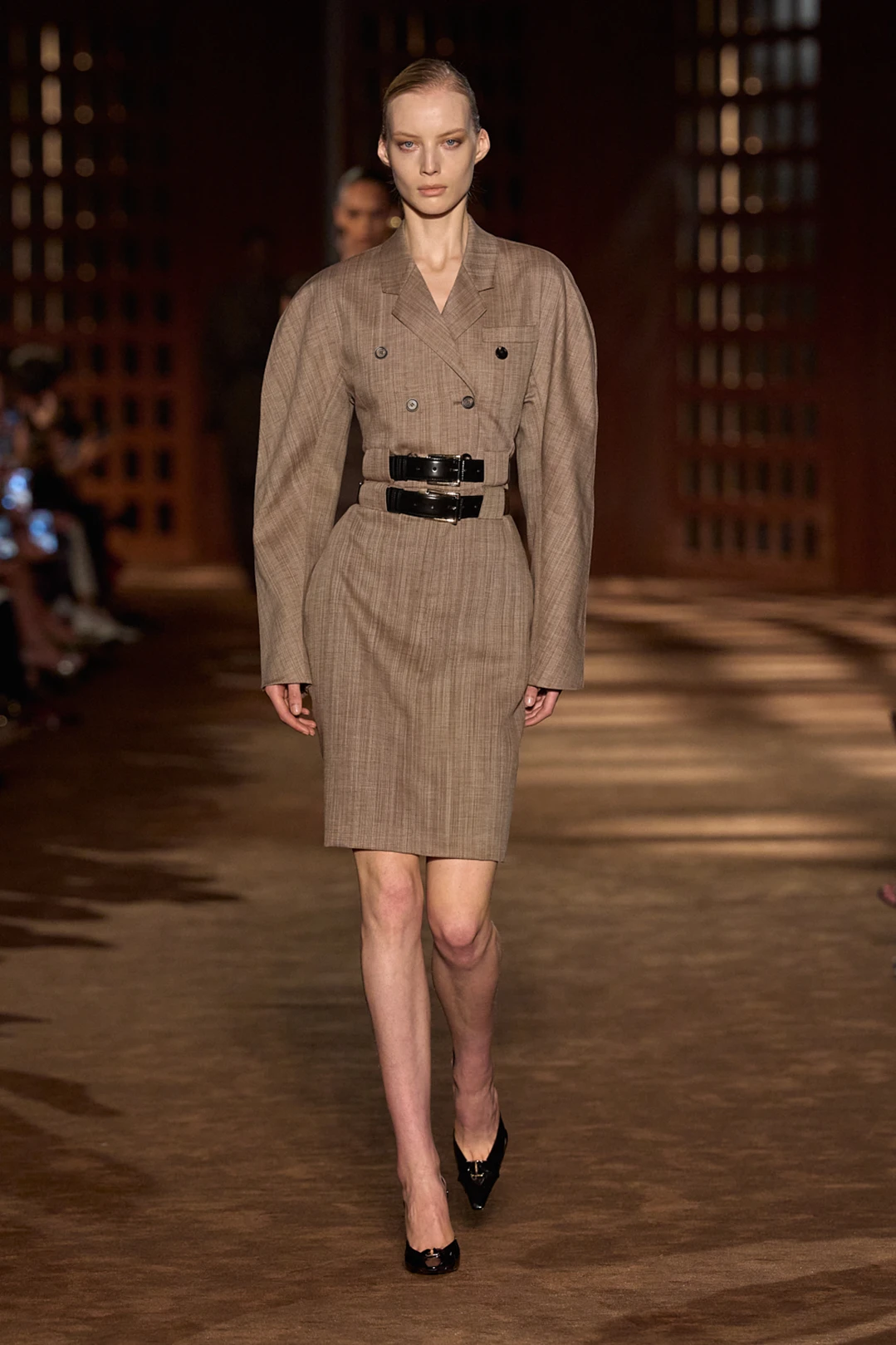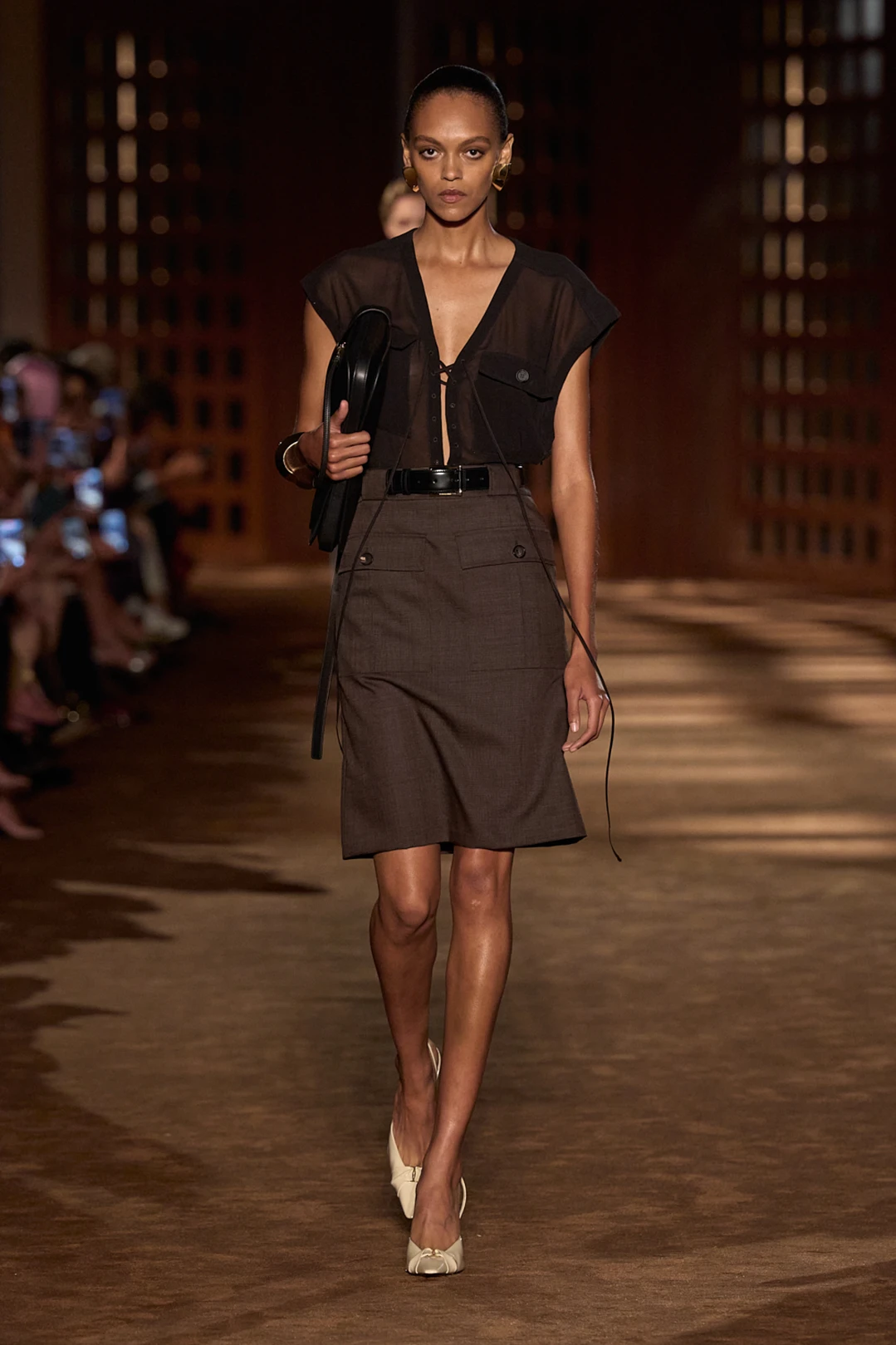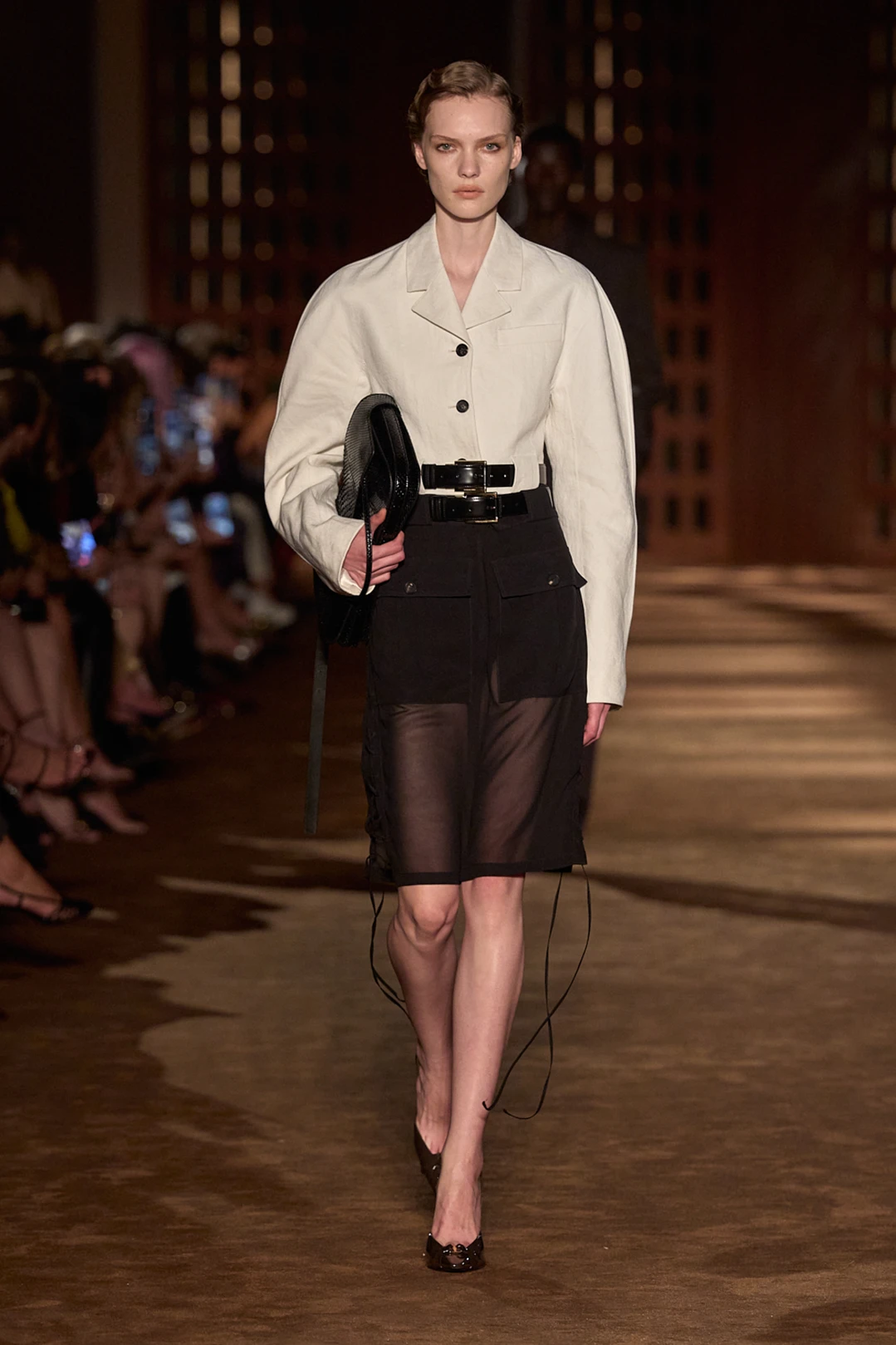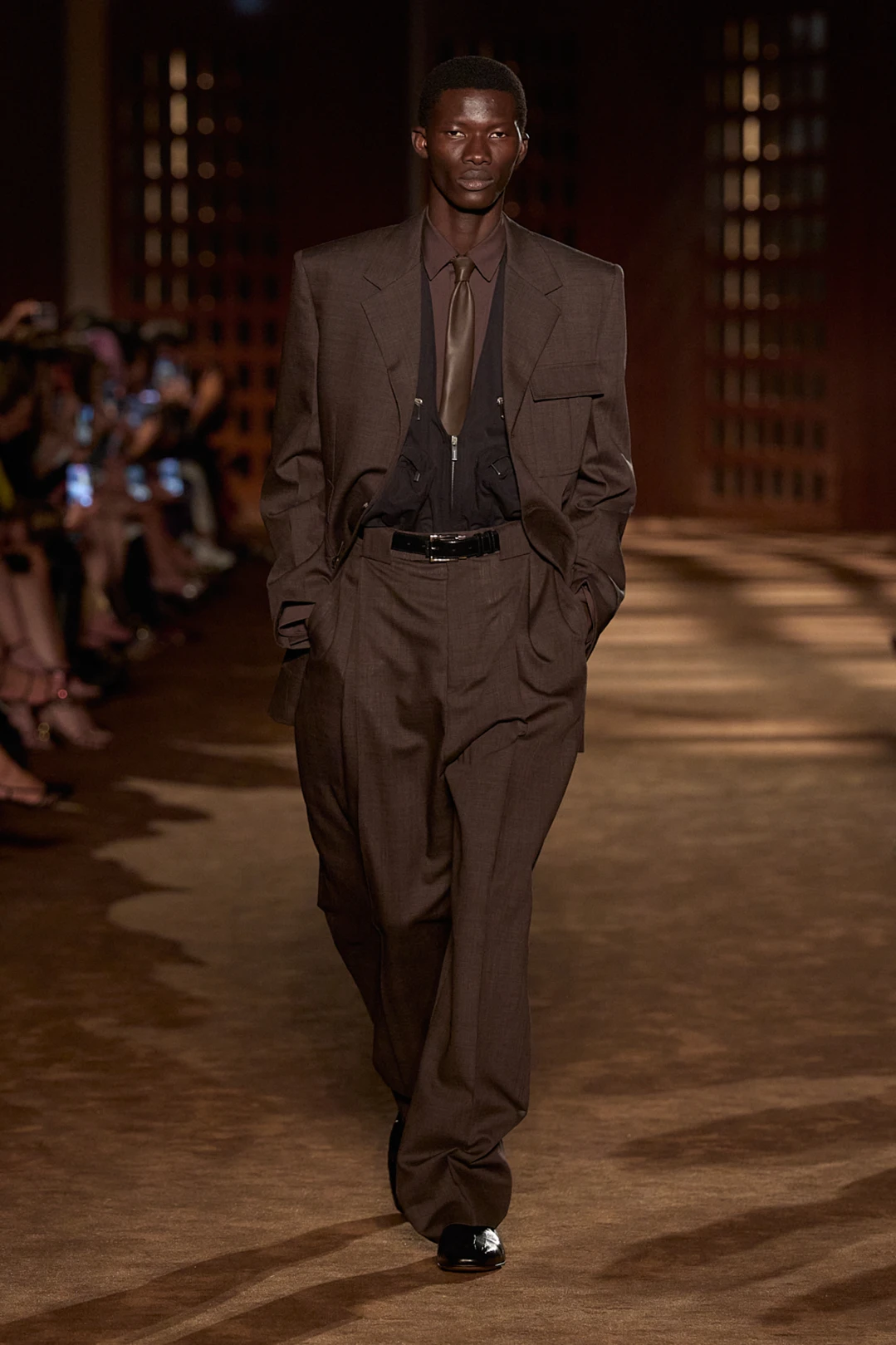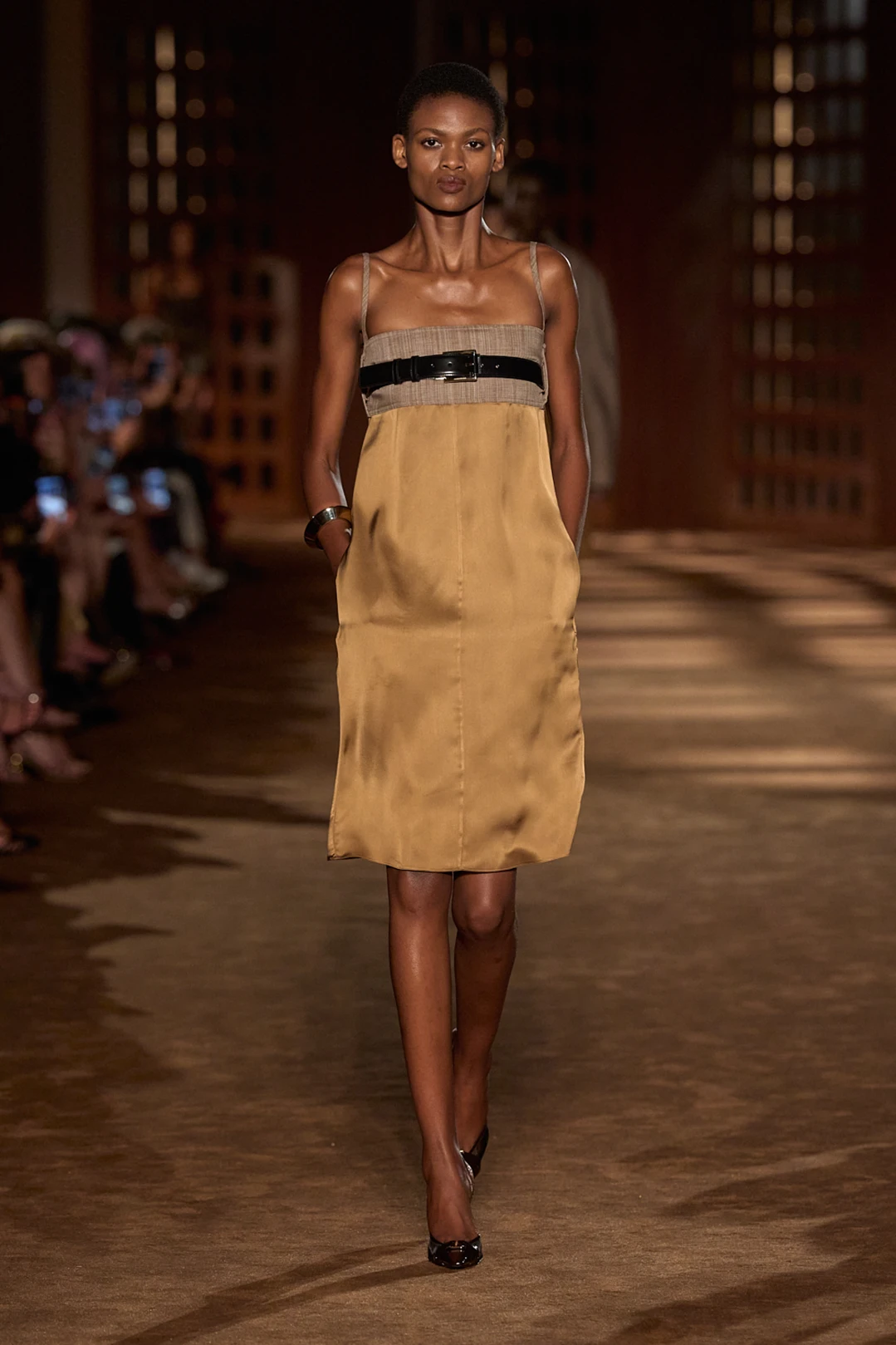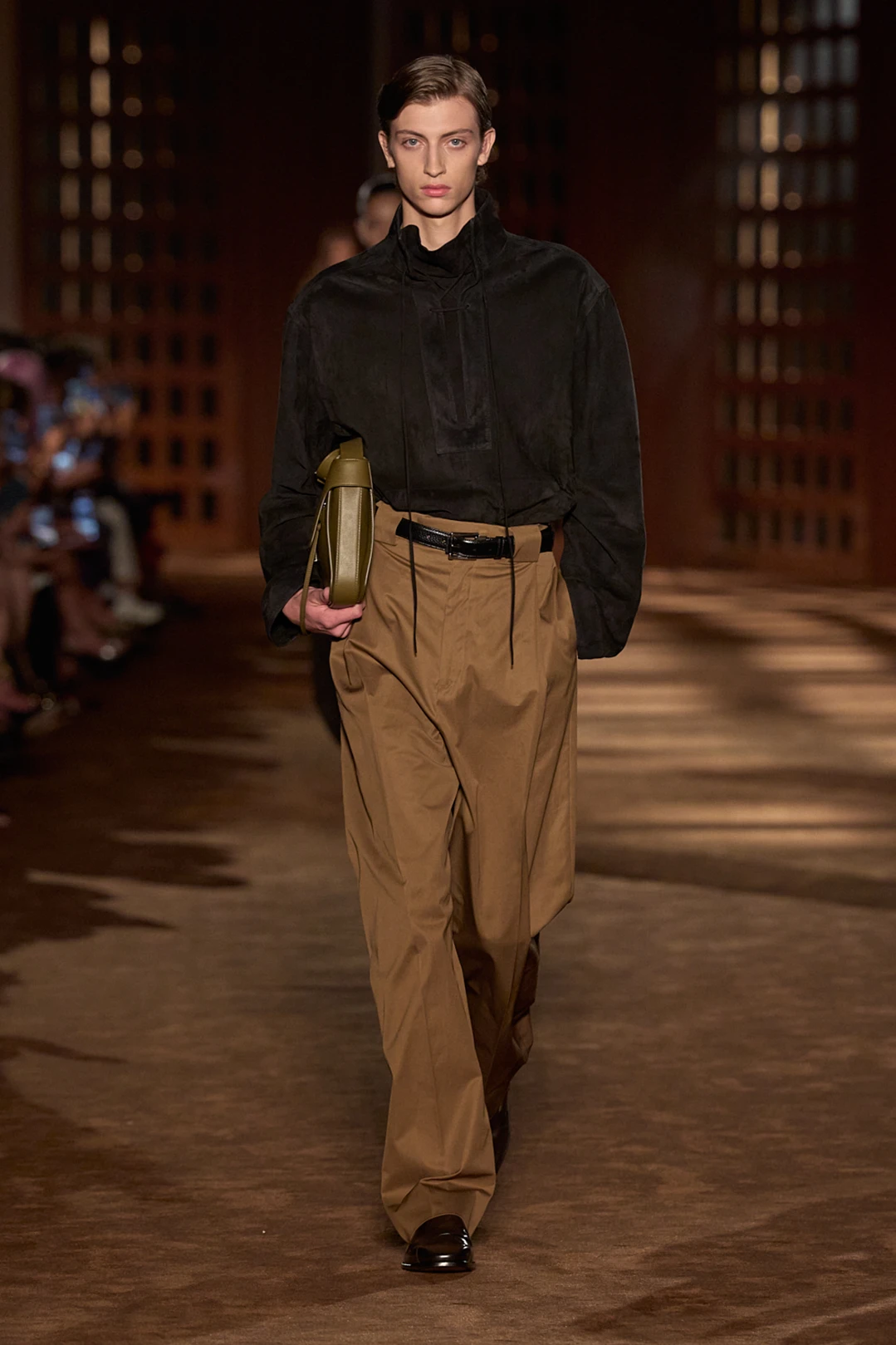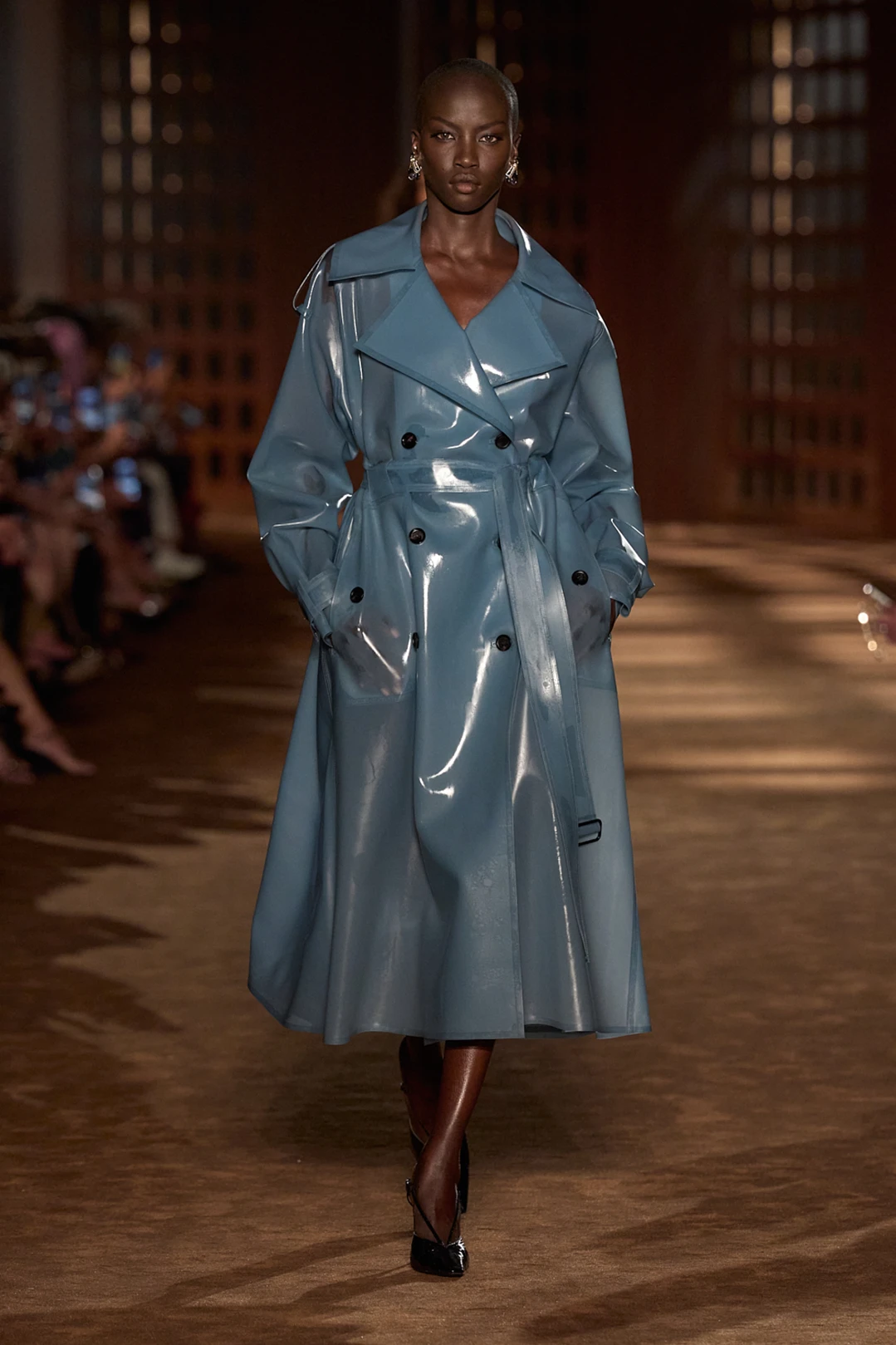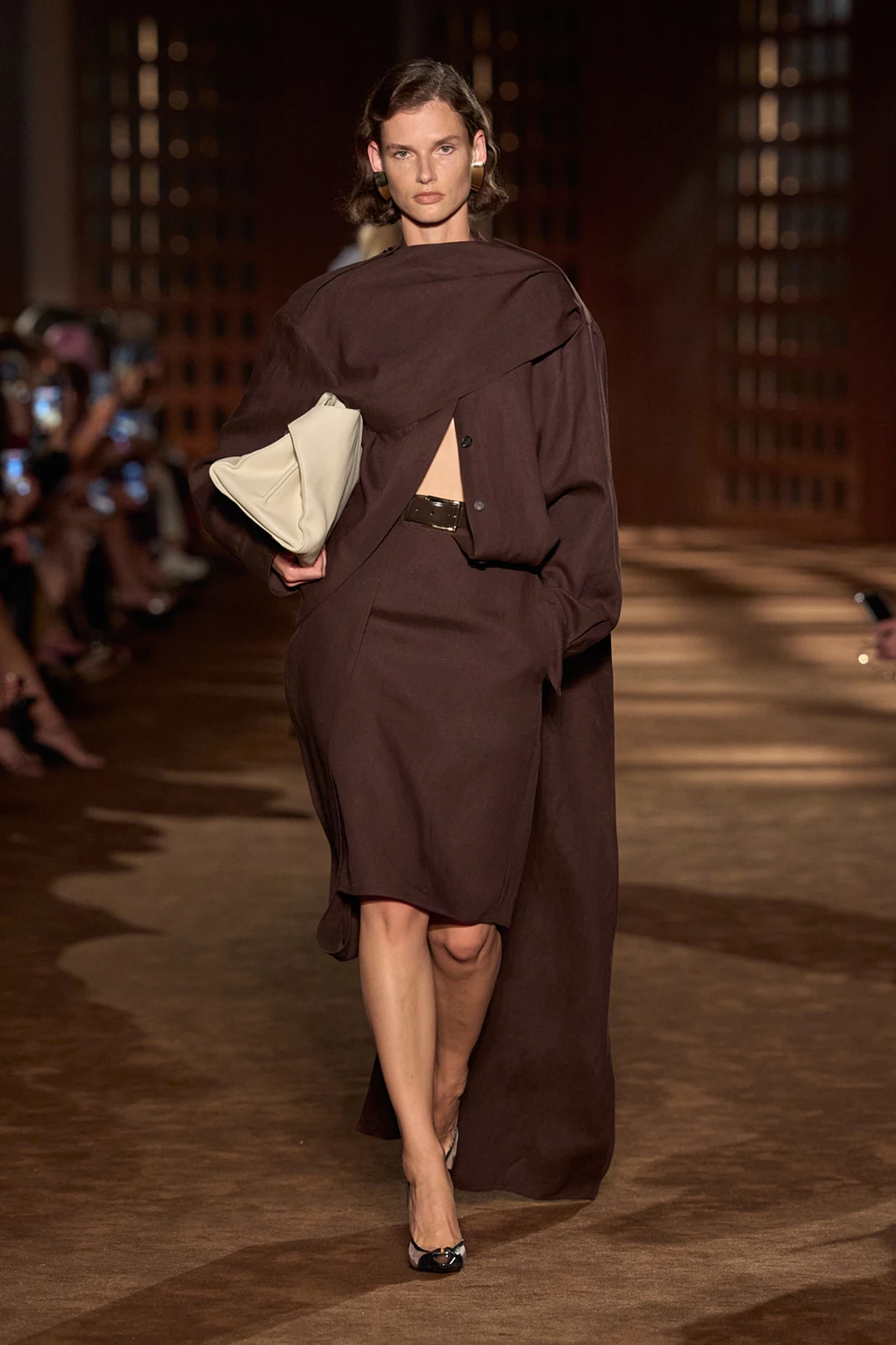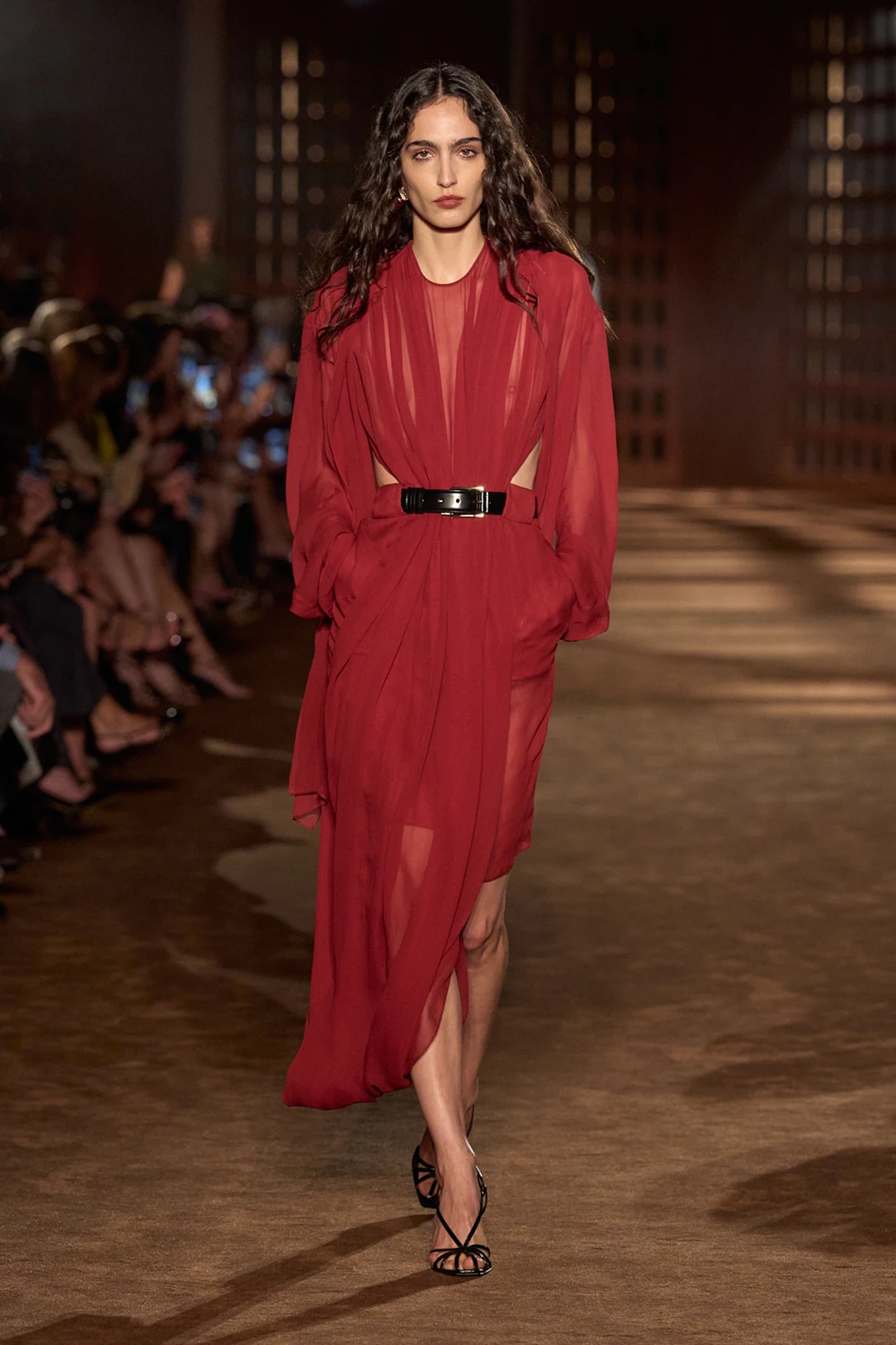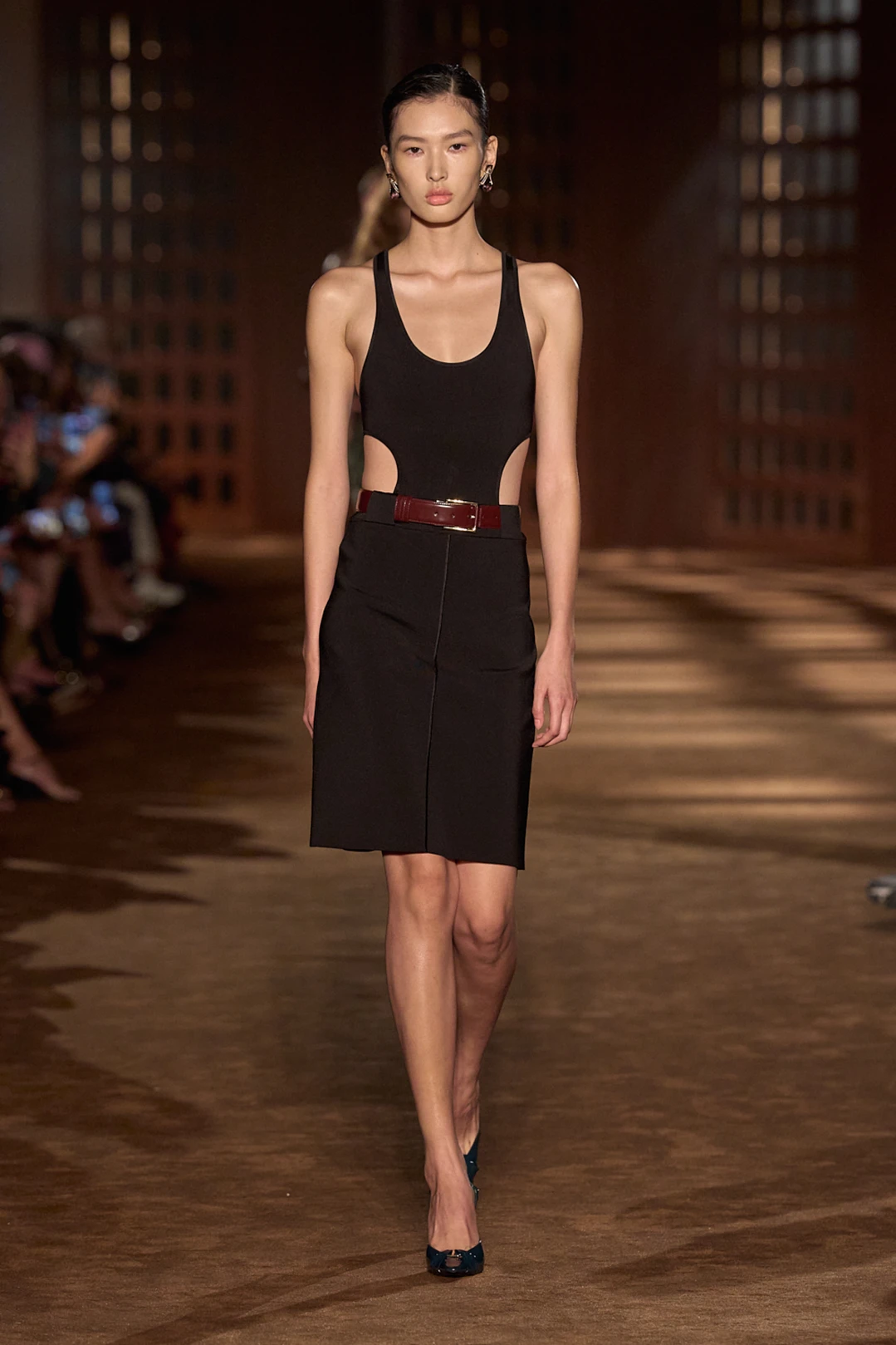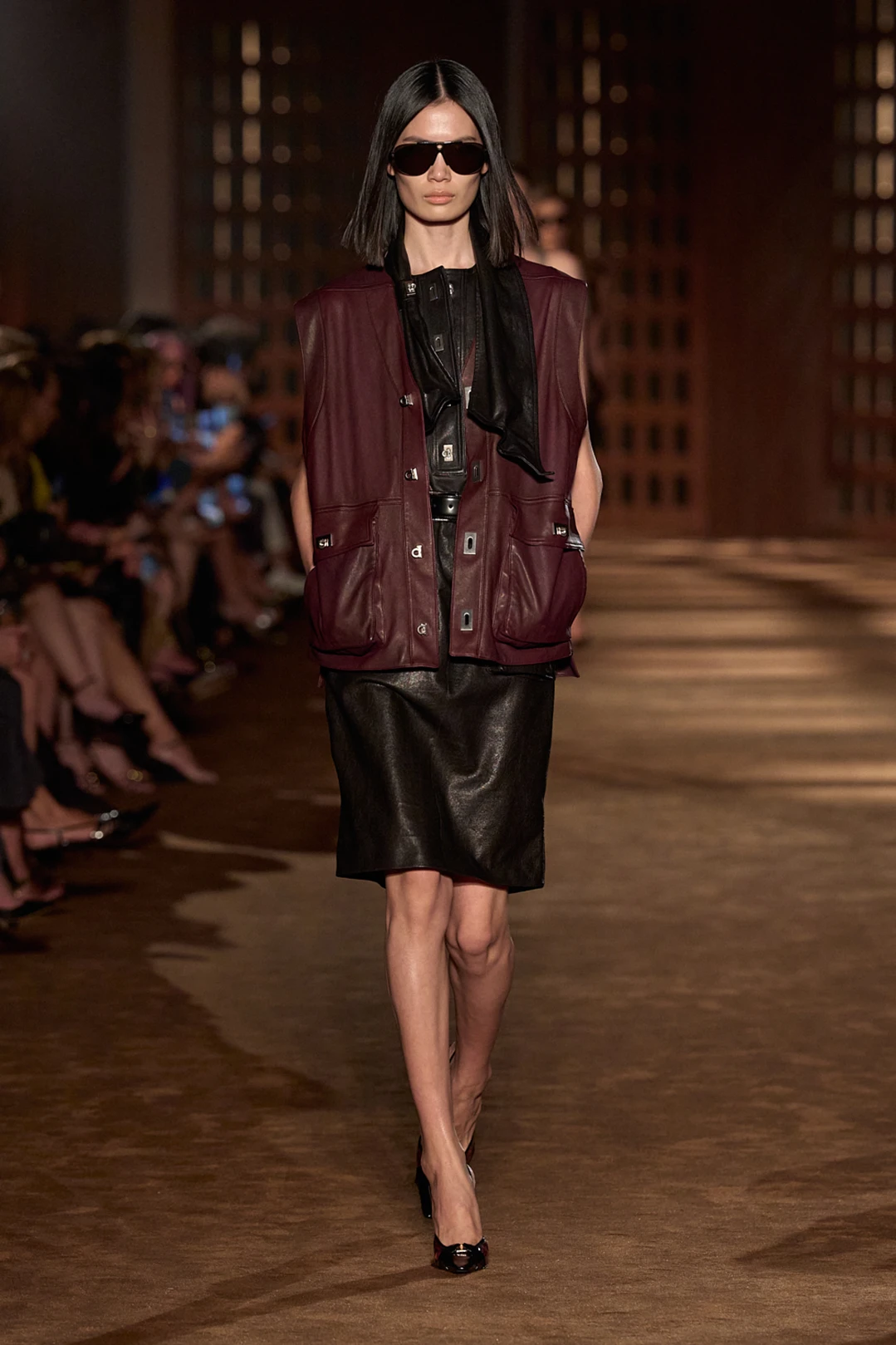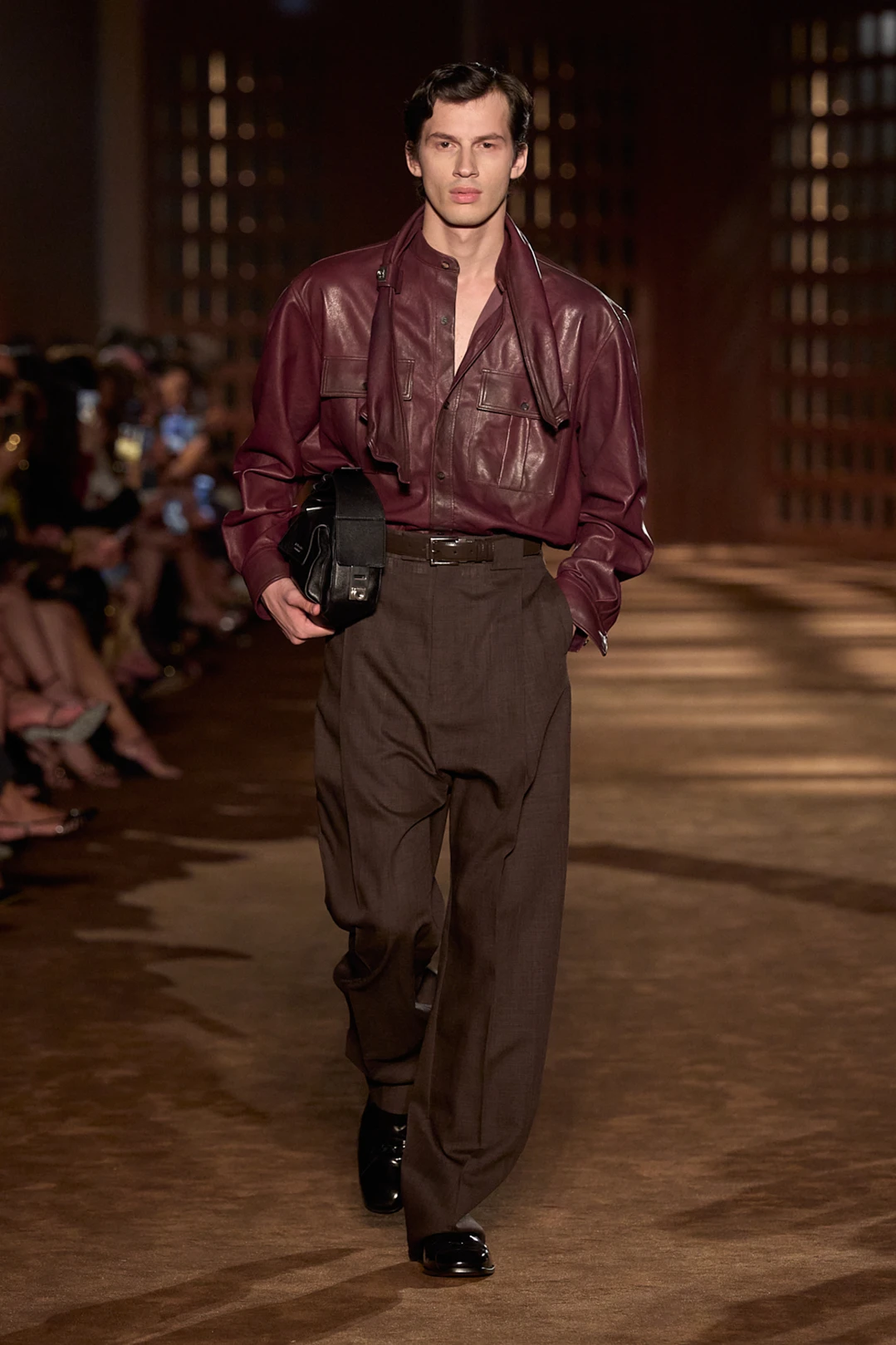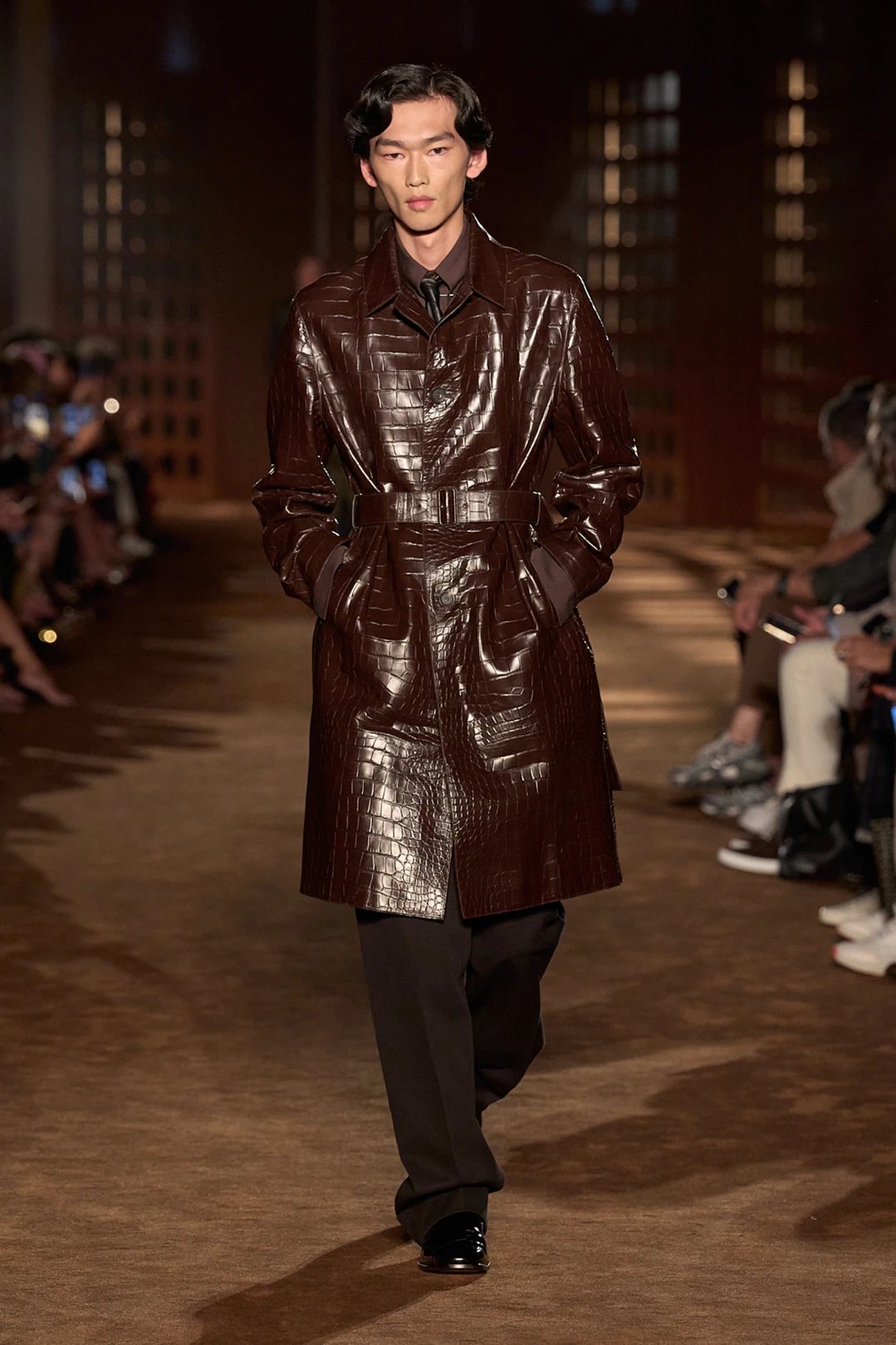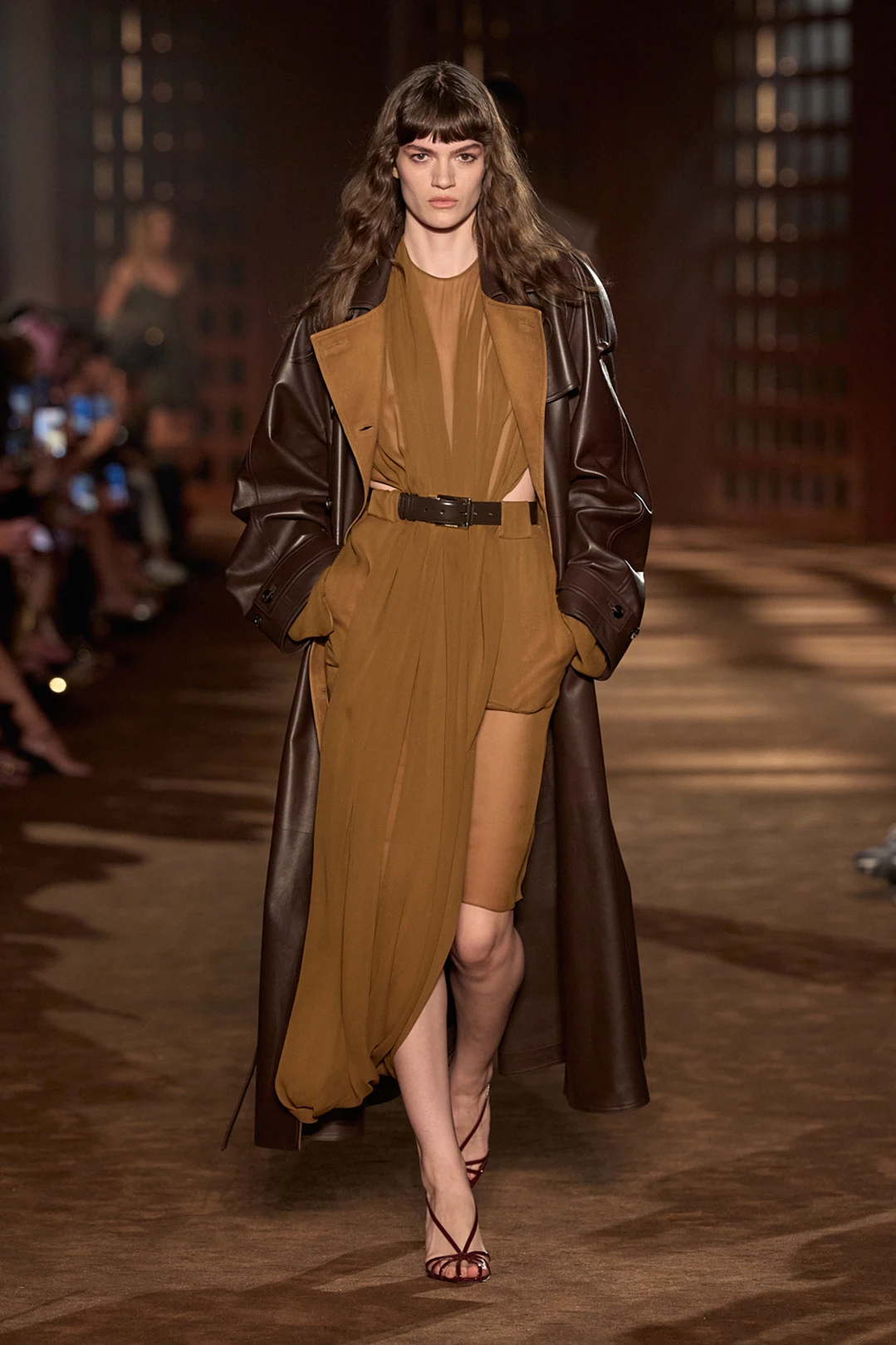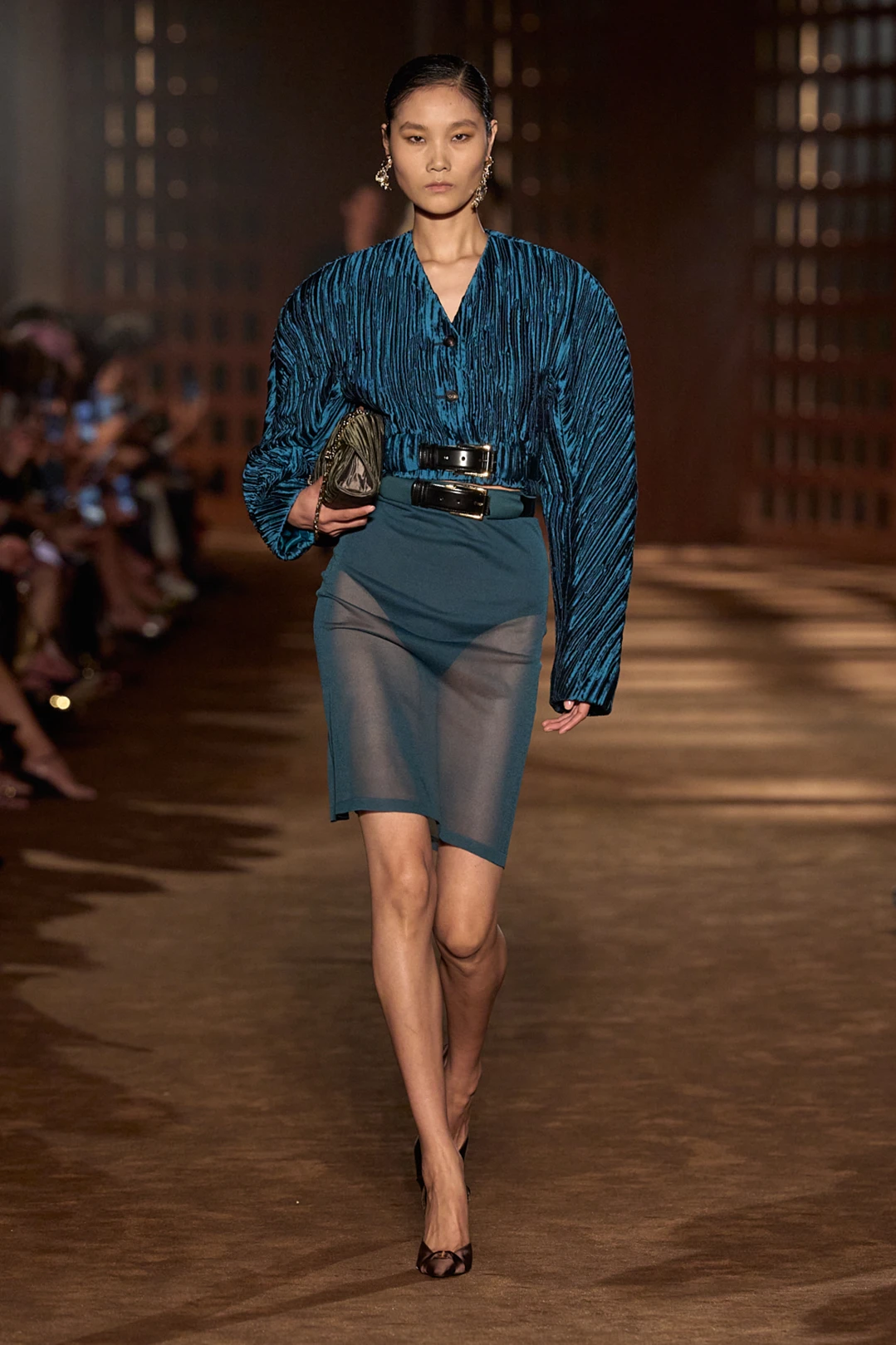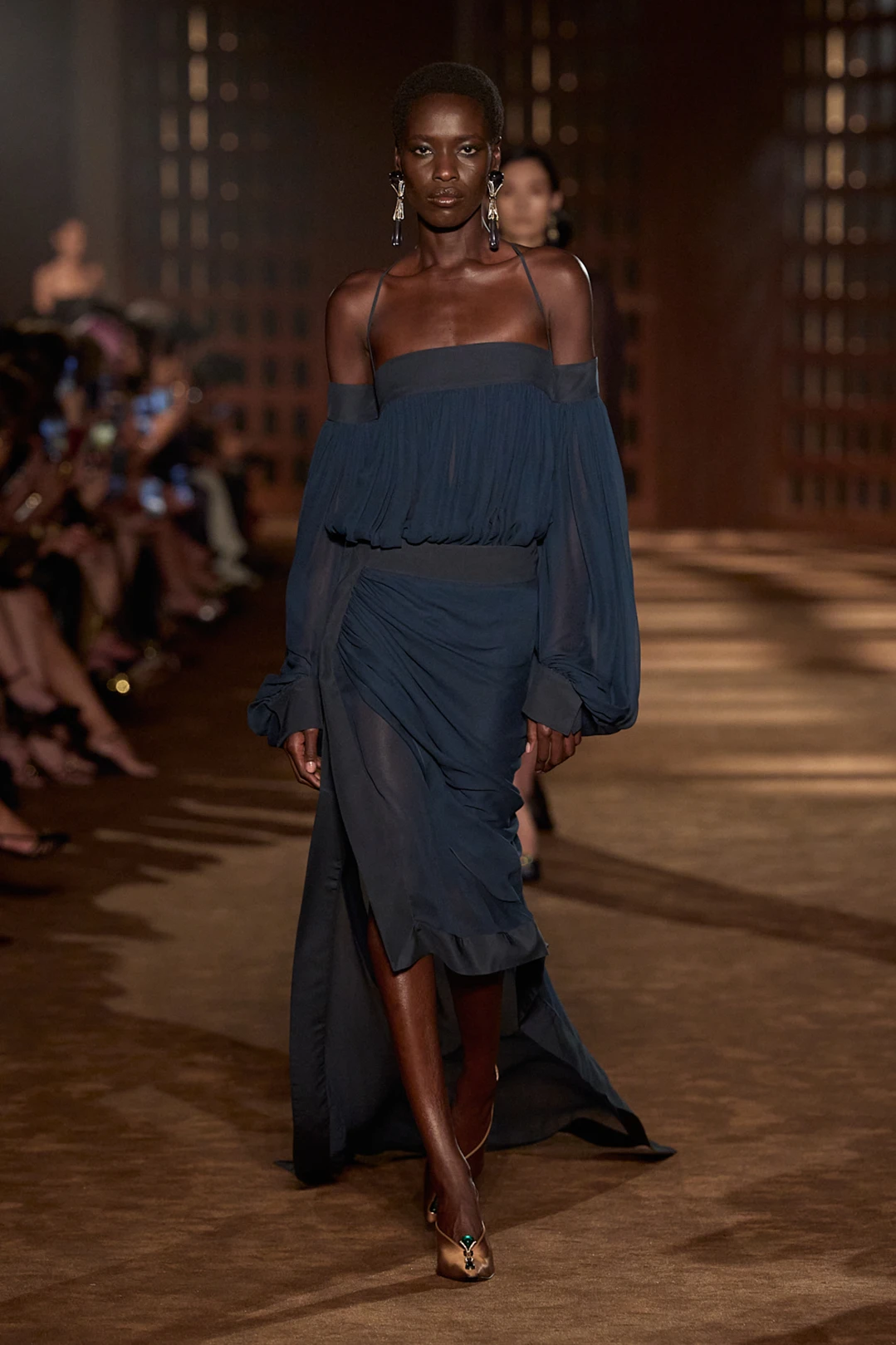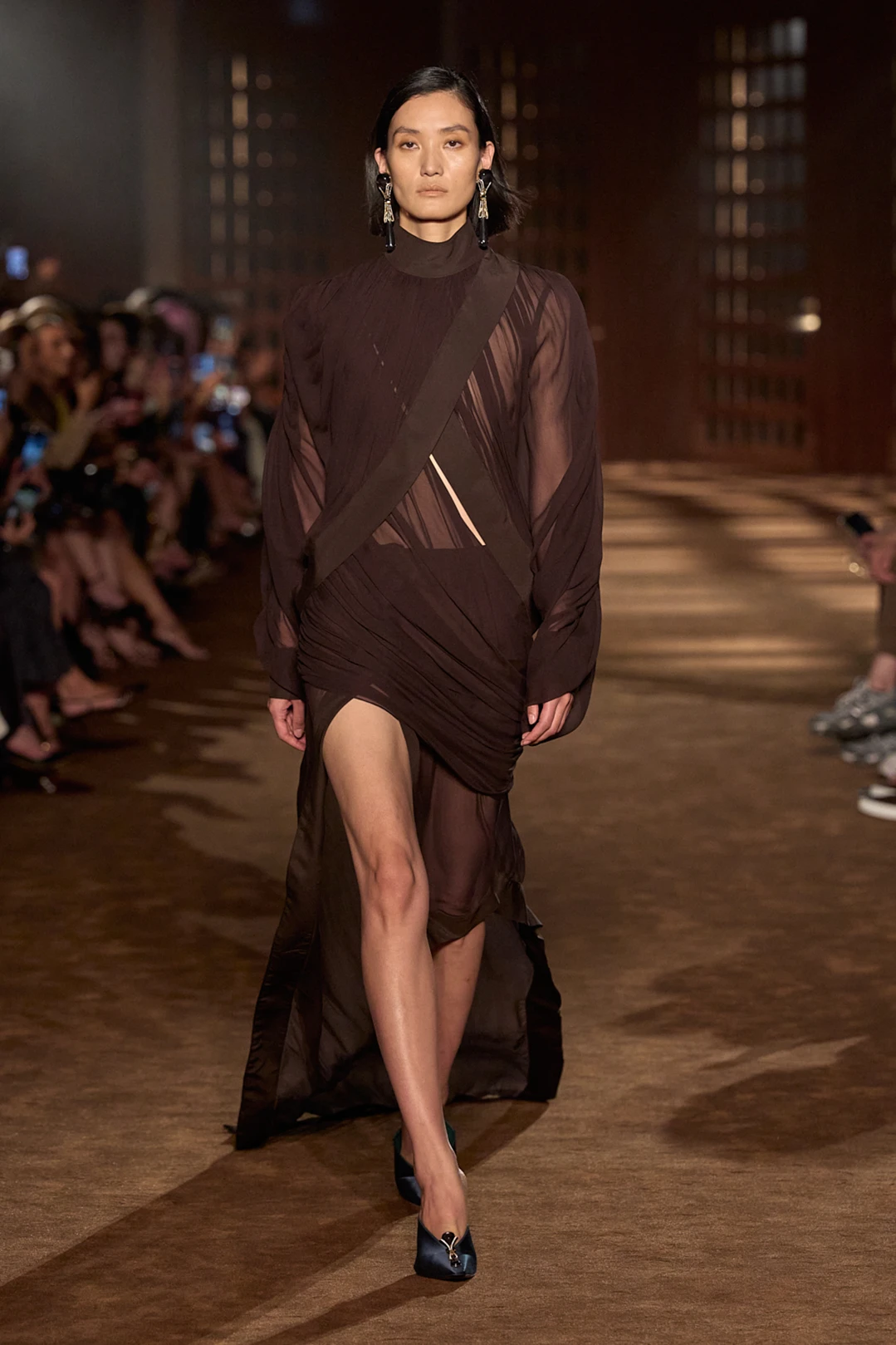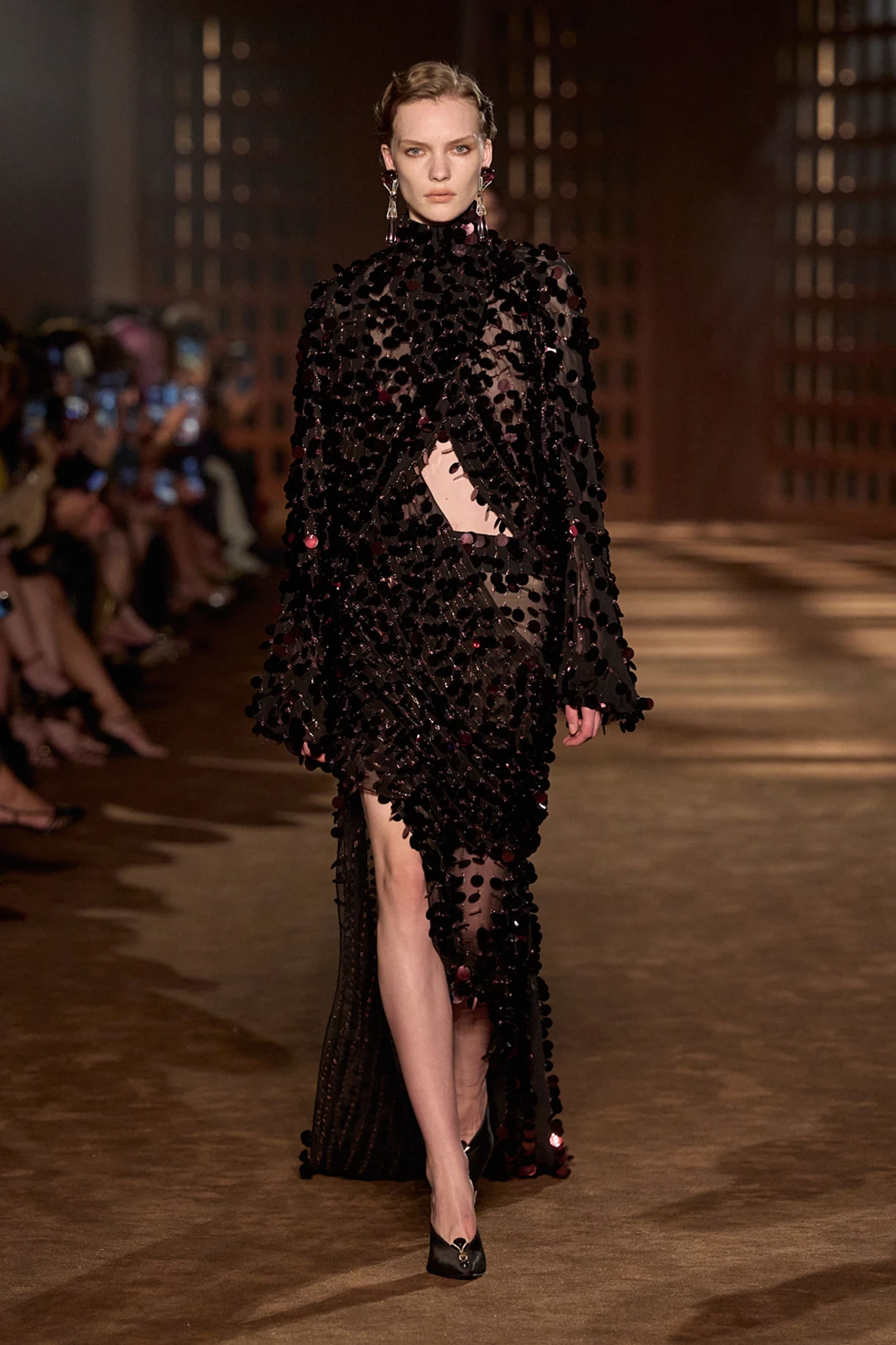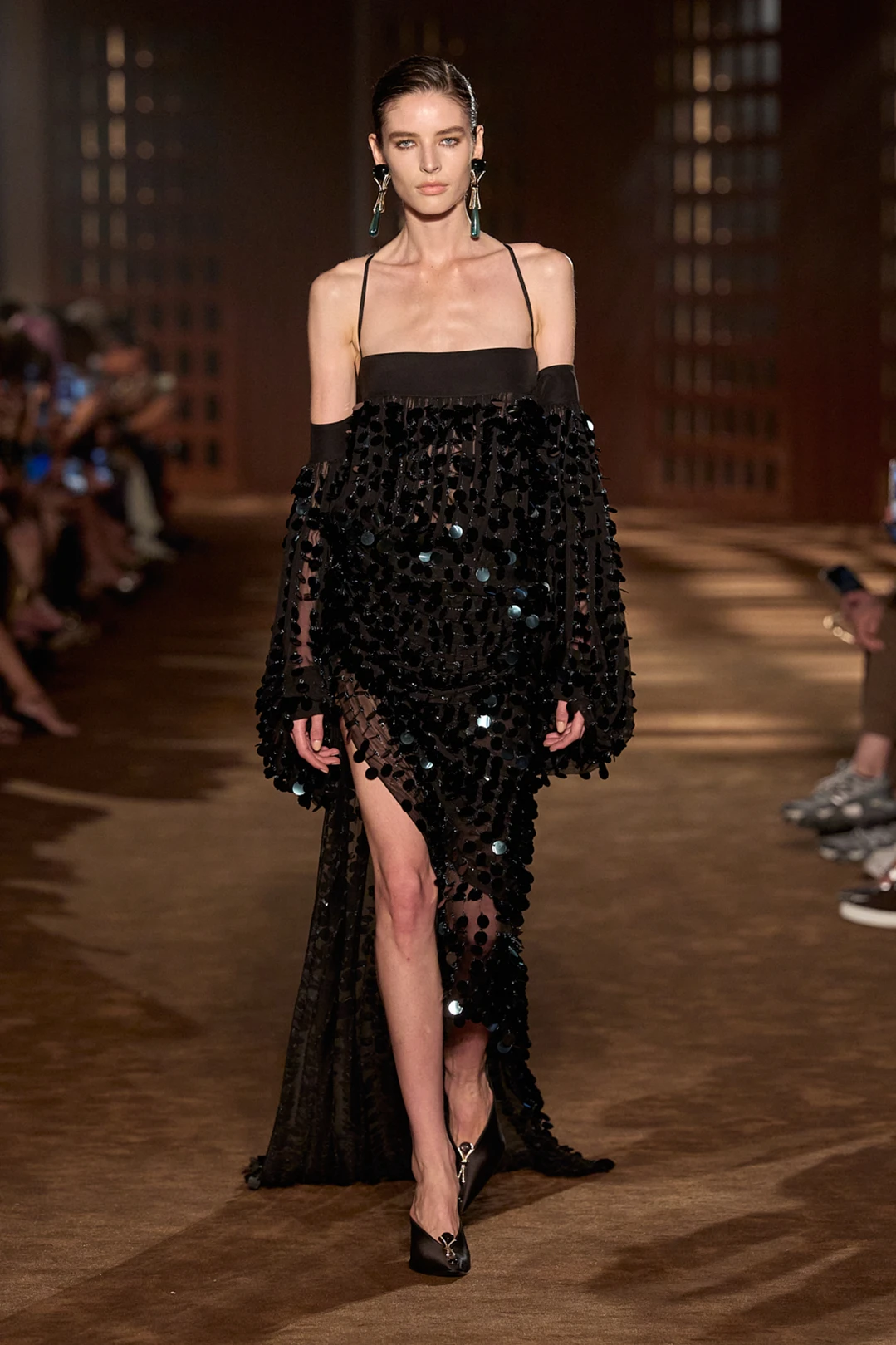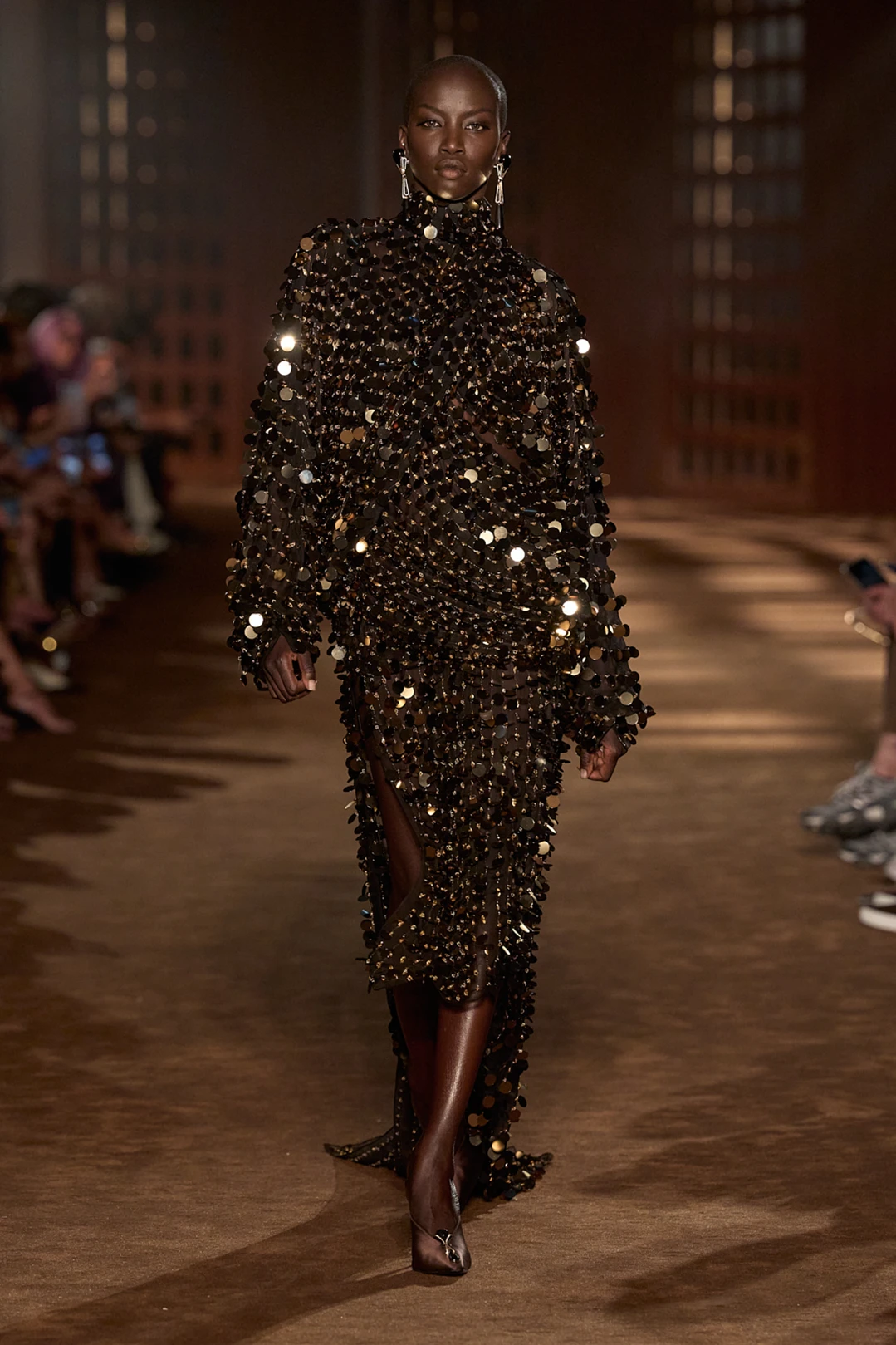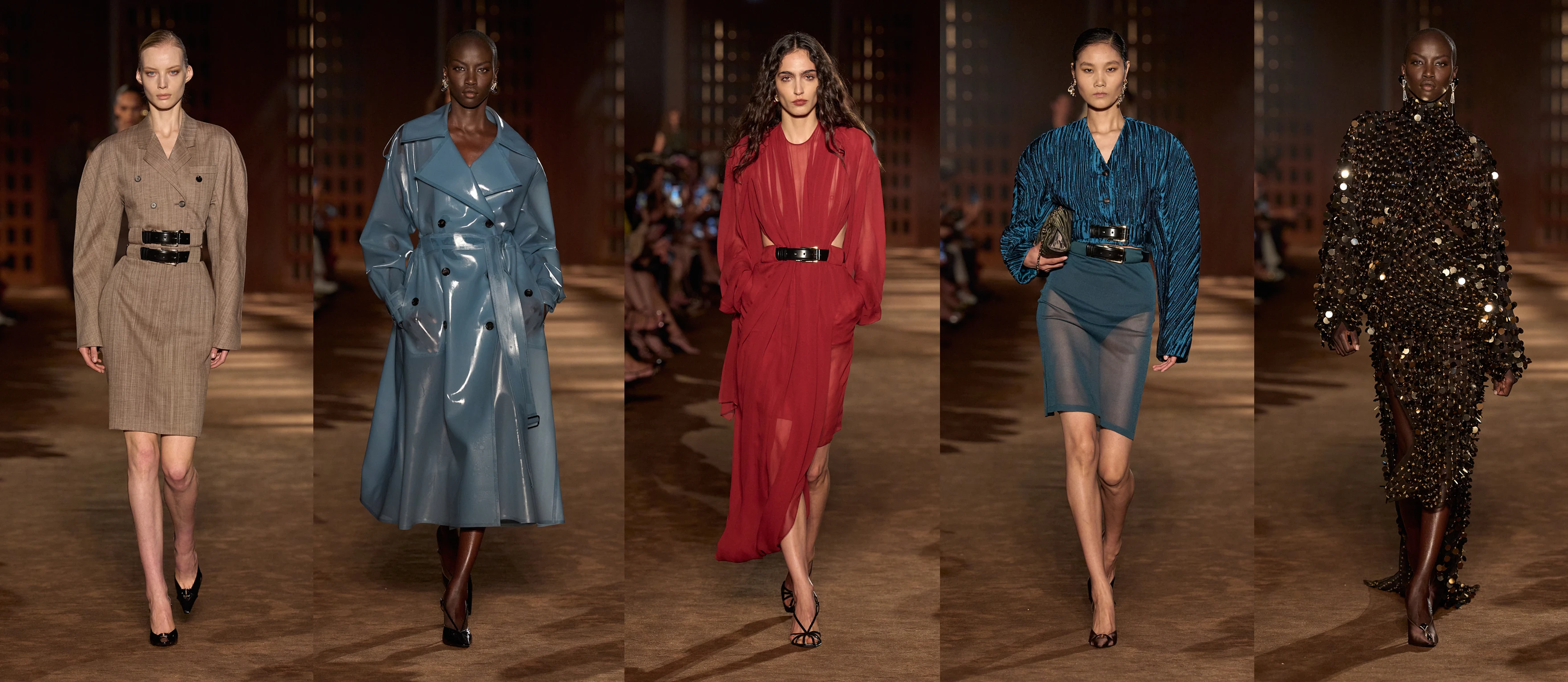
For Spring-Summer 2027, Maximilian Davis continues to explore the stories of liberation told by the 20th Century’s wardrobes. Now, he focuses his gaze on the 1940s and considers its codes through the distinct language he has established at Ferragamo.
Reflecting the period when women entered the workforce, the composed vocabulary of the era’s uniforms and workwear appear distilled to their essence; reduced and refined; reconsidered through a contemporary lens. “It was a period where clothing, and its structure, created a certain posture and propriety: when the placement of pocket would dictate how you would both stand and behave,” explains Davis. “I wanted to take elements of that silhouette and modernise it for today.”
Through this new perspective, high-waisted tailoring, cut close to the body, appears assuredly cinched and double fastened with statement belts, while military pockets are affixed to pencil skirts and outerwear; utility vests tucked beneath suiting; the skirts of trench coats elegantly flared. Fabrications imbue the collection with flashes of fetishism through clinical shades of translucent rubber, leather shirting, or ties rendered in glossy python. Elsewhere, the drapery that has defined Davis’ approach to scarf dressing presents a fluid counterpoint to the defined rigour of the forties silhouette, expressed through ethereal looped silks, leather trains and draped, sequinned gowns.
The Surrealism that has long fascinated Davis recurs as a motif: the tonal textures of its dreamlike rayographic and solarised portraiture informing material transparencies and contrasts. Equally, the fearless exploration of its muses informs the patina of sun-faded leathers, natural fabrications, and prints that echo the topography of terrain. “I was inspired by the women of the era who were taking ownership of their own narrative: who were subjects of imagery but also travelled the world to create their own,” explains Davis. In footwear, the sculptural silhouette of the F wedge, first pioneered by Salvatore Ferragamo in 1947, inspires the curved heel of stilettoes decorated with a new reinterpretation of the iconic Vara bow, alongside a satin mule decorated with Art Deco-inflected jewellery. Another evolution of the F wedge, sometimes seen with a contrasting, illusory heel, also elevates sleek, linear sandals and slingbacks. In menswear, the clean elegance of a double monkstrap shoe is presented alongside a supple nappa leather slipper and a polished iteration decorated with an embroidered toe.
In accessories, the Cara bag, whose graceful design and accordion construction unites form and function, is realised in seasonal leather and suede animations for men’s and womenswear, while the iconic Hug is reproportioned for a new variant of the East-West silhouette and features a new crinkled double silk fabrication.